
Preventing tomorrow's back pain, one notification at a time
Role
UX Researcher & Designer
Timeline
5 months
Platform
IoT Wearable + Mobile App
Tools
Arduino, Figma, Miro
TL;DR - FOR THE BUSY RECRUITER
The Problem
Prolonged sitting is the new smoking—and we're terrible at managing it
Remote work has us sitting 7+ hours daily with inconsistent posture awareness, leading to chronic discomfort in the lower back and neck. Existing solutions require conscious effort, making them easy to forget when you're deep in work.
Our Solution
Passive monitoring meets active guidance
BackTech is an innovative IoT wearable with smart sensors that monitor posture in real-time, paired with a mobile app that delivers personalized alerts, corrective stretches, and educational resources—all designed to work with your workflow, not against it.
My Contributions
End-to-end research, hardware prototyping, and system design
I led diary study kit design, moderation, and analysis across 7 participants; co-designed and analyzed a 104-response survey; led design and moderation of user enactment sessions; coded light sensor functionality; designed physical prototype sensors; and contributed to overall system architecture.
👉 This case study is a high-level overview — full research, prototypes, and system details are available on the project website.
Why design for posture?
BackTech was developed for course SI 612: Pervasive Interaction Design at the University of Michigan School of Information.
Motivation
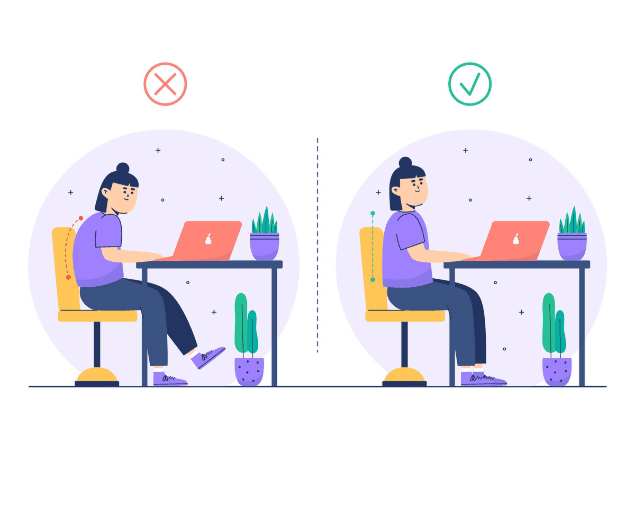
Prevalence of discomfort after prolonged sitting
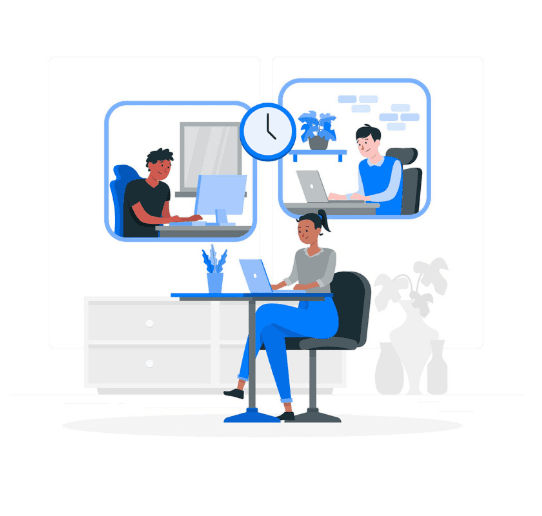
Rise in remote & hybrid working mode
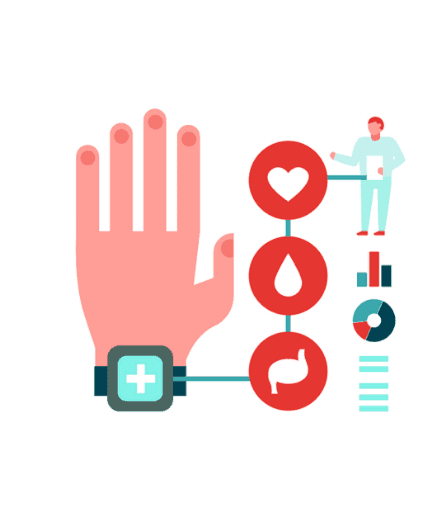
Technological Integration in Health
The rise of hybrid and remote work models has fundamentally changed how we interact with our workspaces. Without the natural movement of office environments, professionals are sitting longer with worse posture—and feeling it. Our formative research revealed:
7+ hours of daily sitting among participants
Frequent discomfort during and after work sessions
Inconsistent awareness of posture while focused on tasks
Clear desire for improvement but lack of actionable guidance
The Gap
People want to improve their posture and overall health, but existing solutions require active participation at moments when they're least likely to think about it.
How do you design a device people will actually wear?
Starting from unique challenges
Invisible behavior: Posture is unconscious—how do you make the unconscious conscious without being intrusive?
Wearability concerns: Previous attempts at posture devices felt medical or bulky
Behavior change: Moving from awareness to action requires more than just data
IoT complexity: Balancing sensor accuracy with user-friendly technology
Our Research-Driven Approach
Seamless integration, personalized guidance
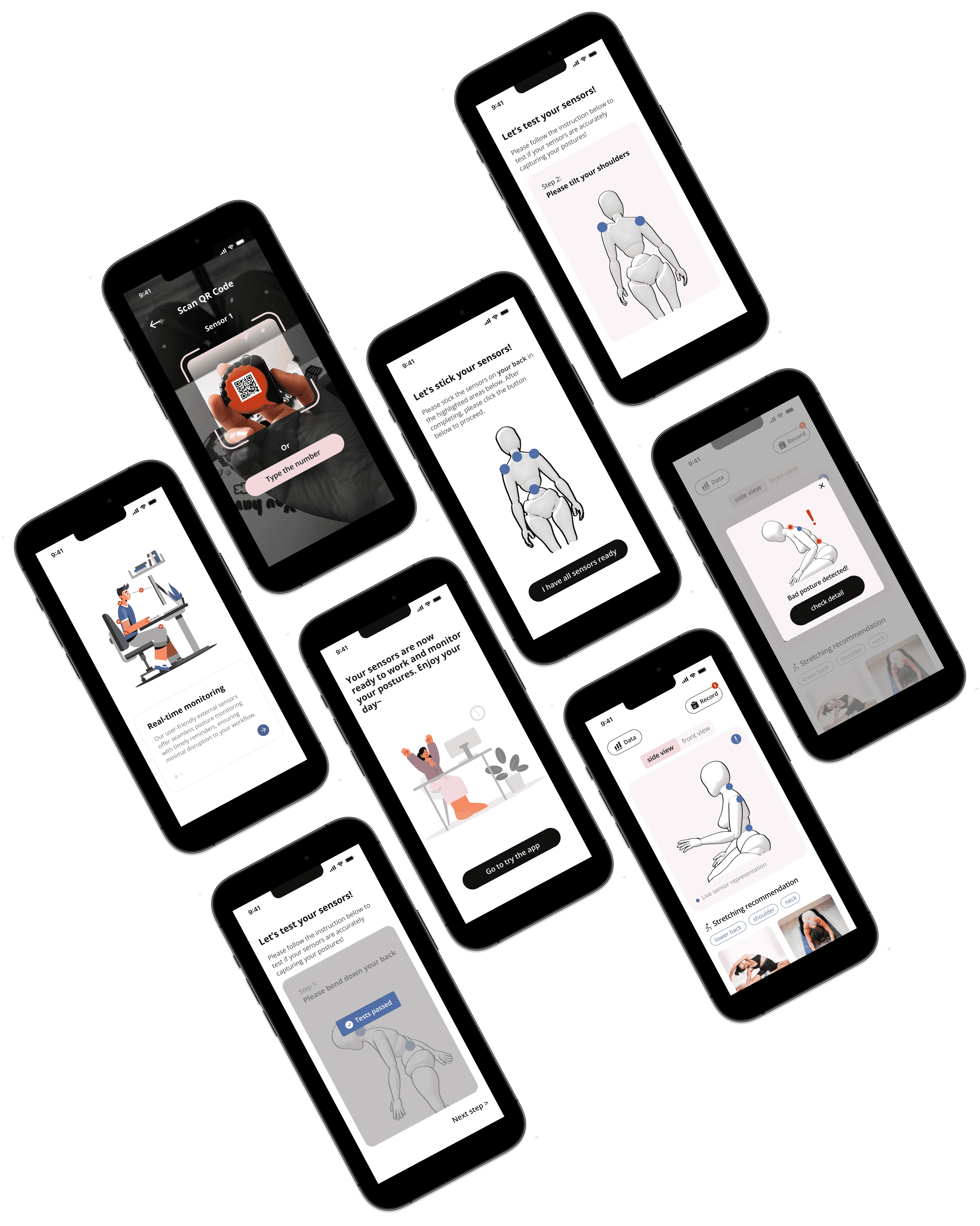
Wearable Design: Smart sensors that disappear into your routine
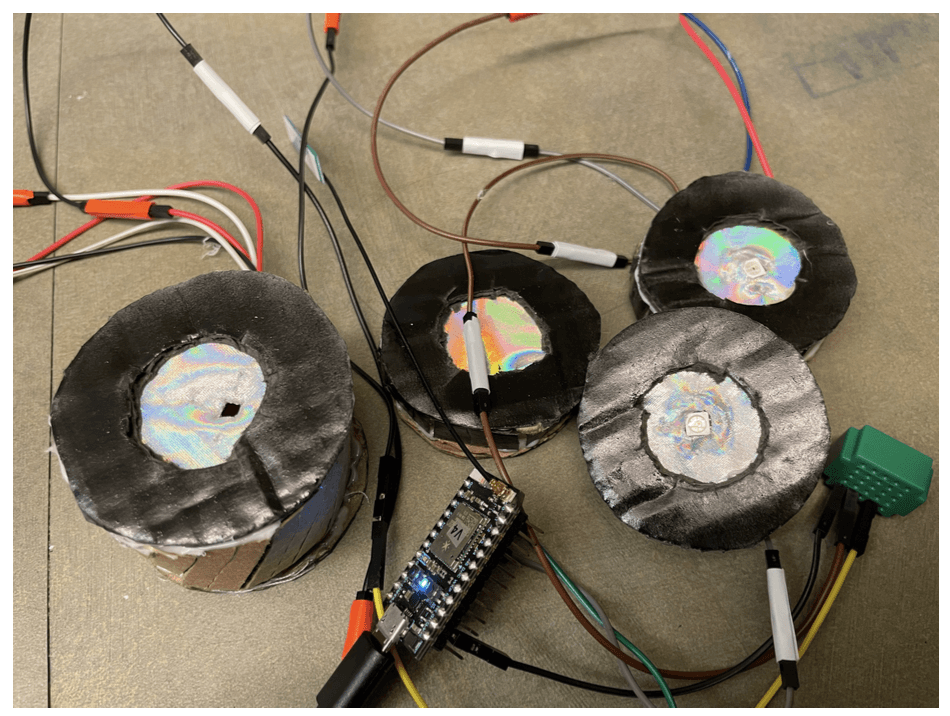
Prototype of sensor
Strategic placement on key back joints for accurate posture detection
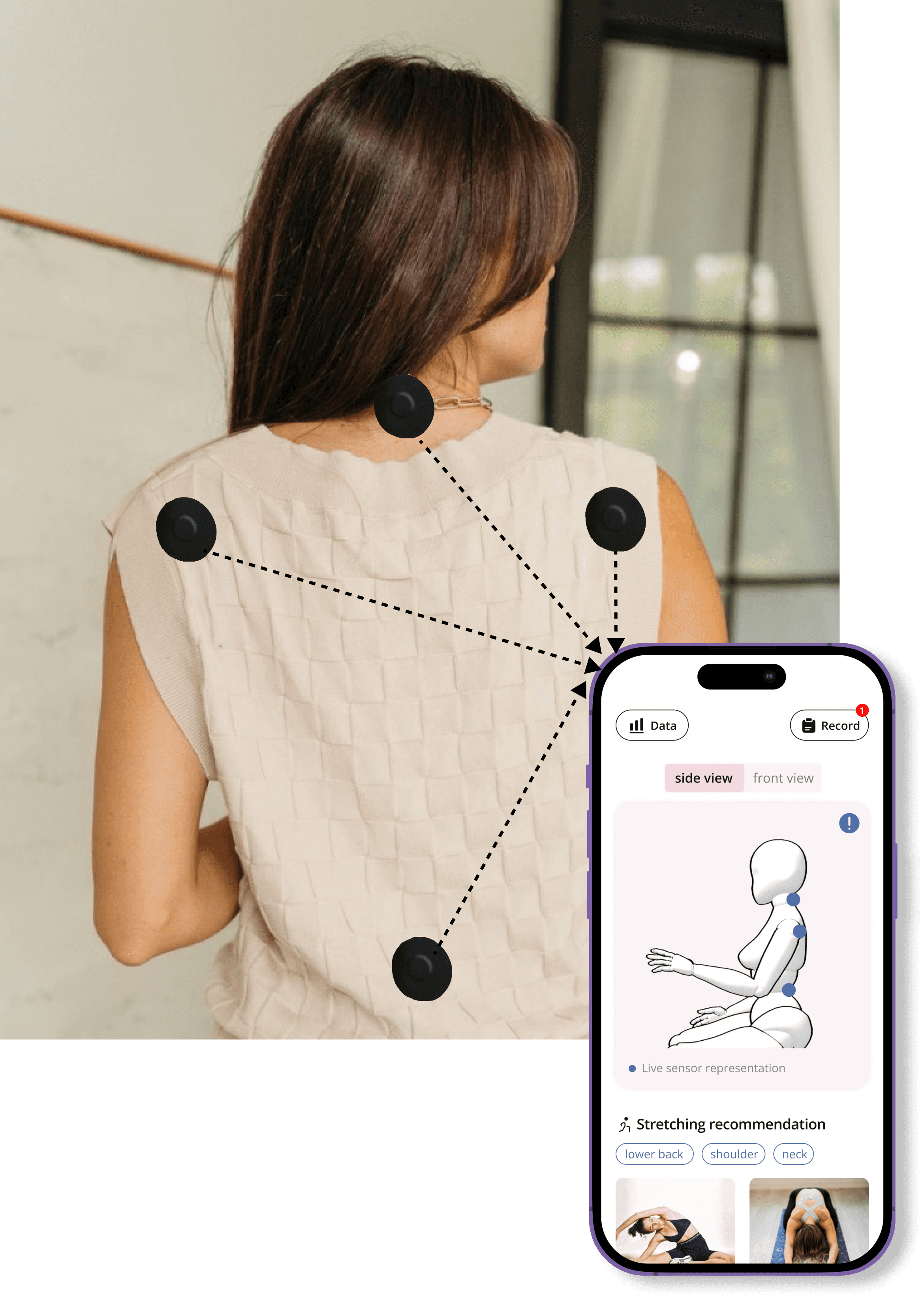
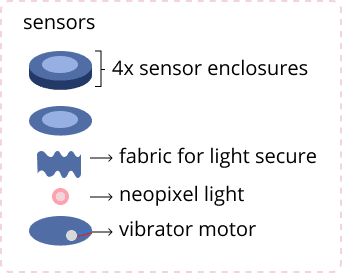
Status lights for quick connection confirmation
Vibration alerts for immediate, private feedback
Mobile App: Your personal posture coach
Easy pairing with intuitive setup flow
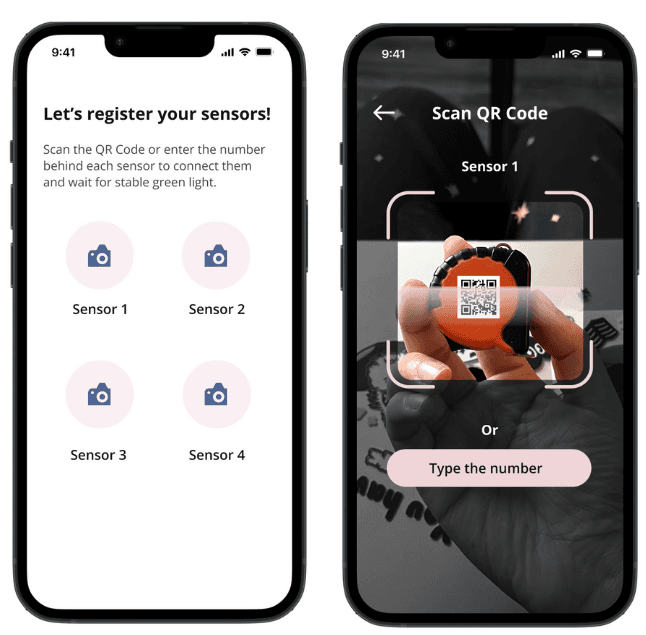
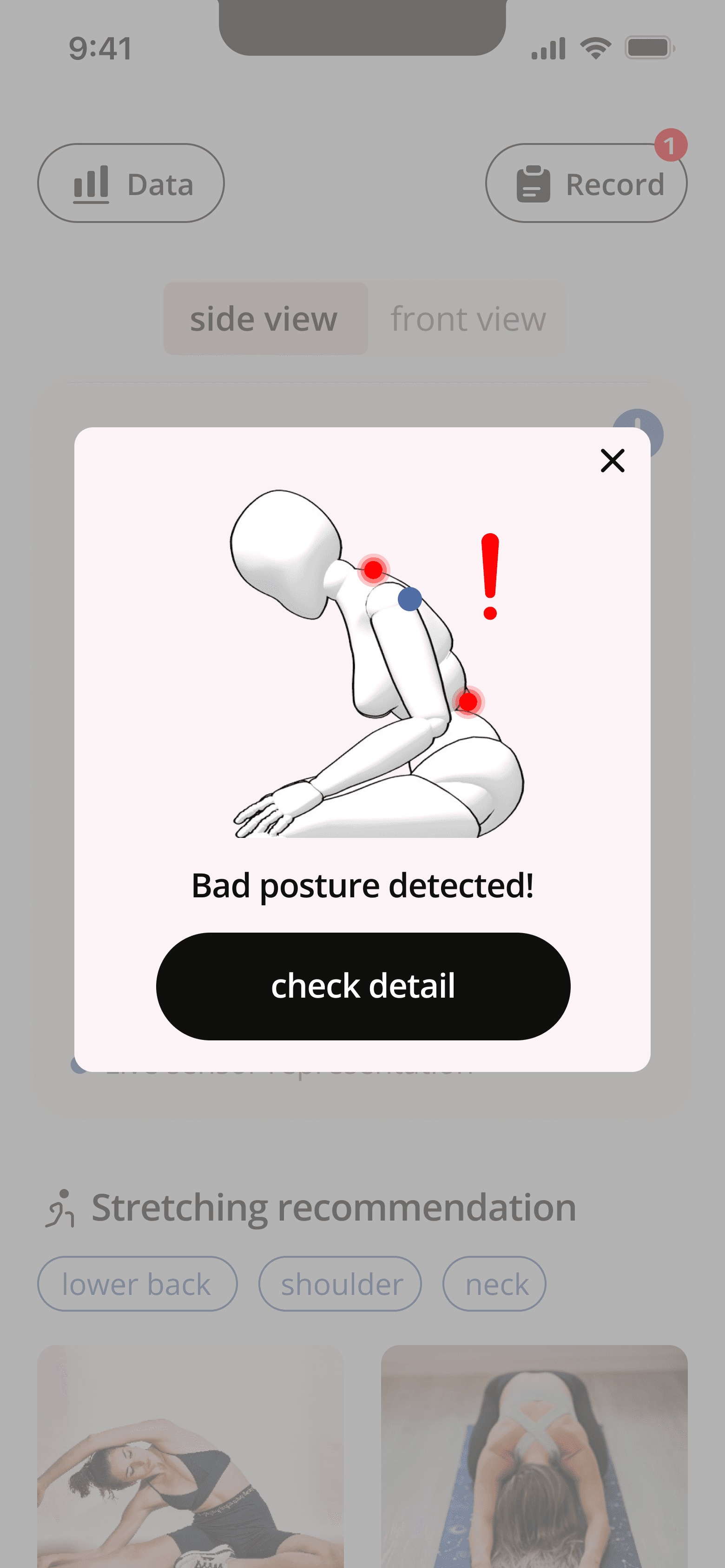
Real-time monitoring with clear visual feedback
Real-time transparency: Status updates during stops to reduce anxiety
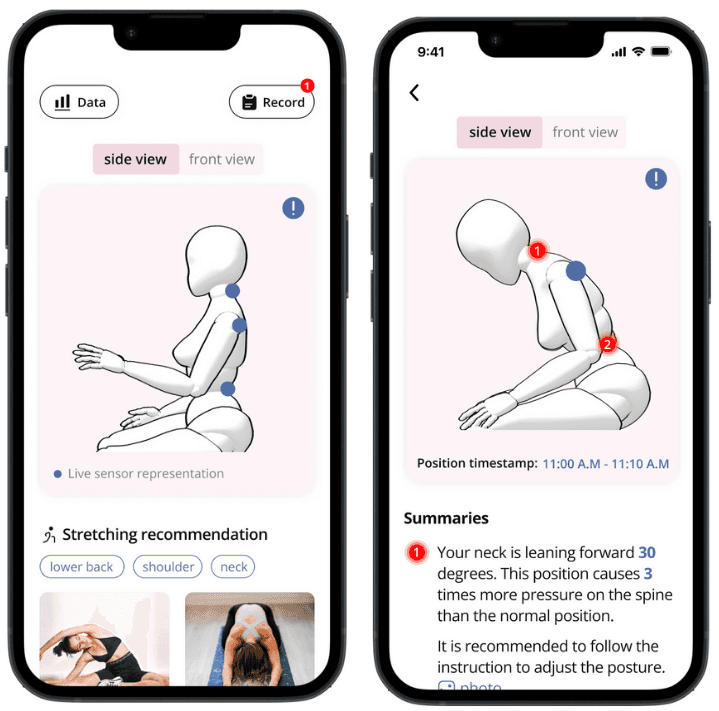
The System in Action
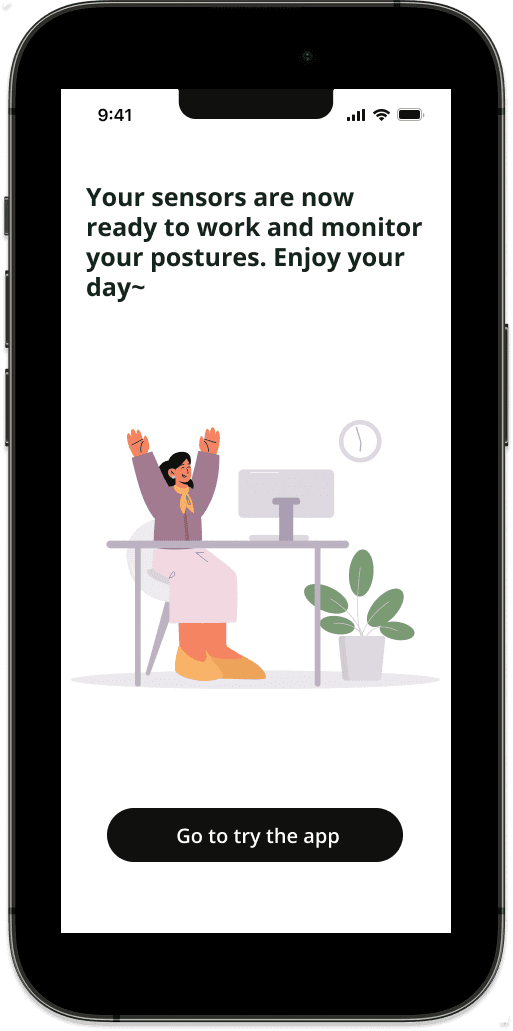
Check Out Our Prototype: Click the image to interact with our Figma prototype!
What we learned from testing
Key Insights
✓
Positive reception of passive monitoring—users appreciated not having to remember
✓
Guidance is critical—alerts without clear next steps caused frustration
✓
Customization matters—one-size-fits-all sensitivity led to alert fatigue
Areas for Iteration
1
Sensor placement guidelines needed clearer visual instructions
2
Functionality explanation required upfront education on how detection works
3
Notification timing needed more intelligent scheduling around deep work
How can this change ergonomic health in the future?
BackTech represents a practical approach to addressing a widespread problem affecting young professionals, students, and remote workers. By combining passive monitoring with active guidance, we created a system that supports ergonomic health without disrupting productivity.
Potential Impact:
Reduced chronic pain and discomfort from prolonged sitting
Improved posture awareness and long-term behavioral change
Enhanced productivity through better physical well-being
Preventative approach to musculoskeletal issues
What did this project demonstrate?
Want to dive deeper into our research and process?
Explore our full case study for detailed research findings, prototype iterations, and user testing results.